An unprecedented wave of AI-generated misinformation about the US-Israel war with Iran is being monetised by online creators with growing access to generative AI technology, experts have told BBC Verify.
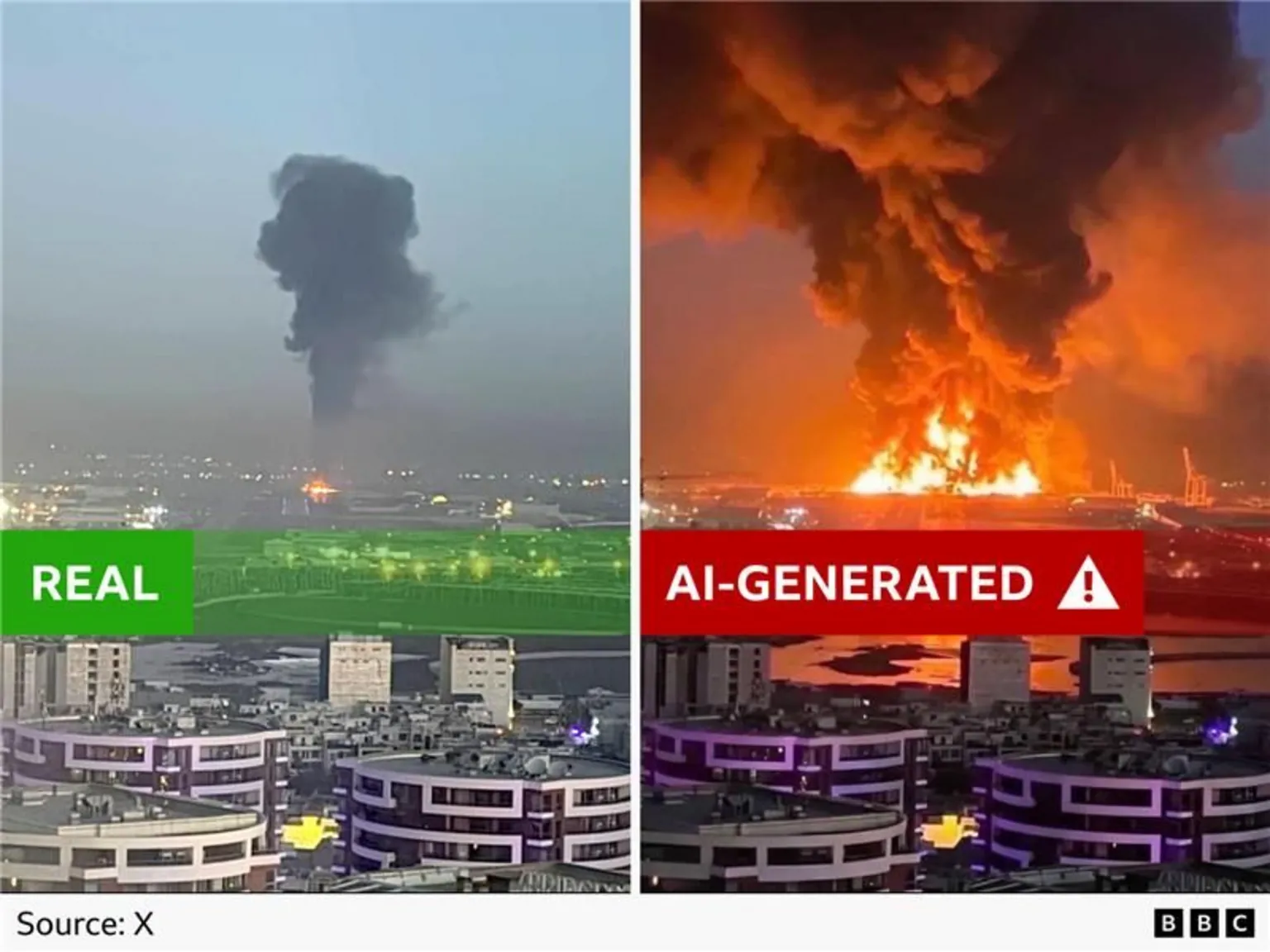
Our analysis has found numerous examples of AI-generated videos and fabricated satellite imagery being used to make false and misleading claims about the conflict which have collectively amassed hundreds of millions of views online.
“The scale is truly alarming and this war has made it impossible to ignore now,” says Timothy Graham, a digital media expert at the Queensland University of Technology.
“What used to require professional video production can now be done in minutes with AI tools. The barrier to creating convincing synthetic conflict footage has essentially collapsed,” he says.
The US and Israel began launching strikes on Iran on 28 February. In response, Iran has launched drone and missile attacks on Israel, as well as multiple Gulf nations and US military assets in the region.
Many have turned to social media to search for and share the latest information and to help make sense of a fast-moving week of conflict.
The platform X announced this week it will temporarily suspend creators from its monetisation programme if they post AI-generated videos of armed conflict without a label.
The scheme rewards eligible users whose posts create large numbers of views, likes, shares and comments with payments from the platform.
“It’s a notable signal that they’ve noticed that this is a big problem,” says Mahsa Alimardani, a researcher specialising in Iran at the Oxford Internet Institute.
We asked TikTok and Meta, the company of Facebook and Instagram, if they intend to take similar action, but they did not respond to our requests for comment.
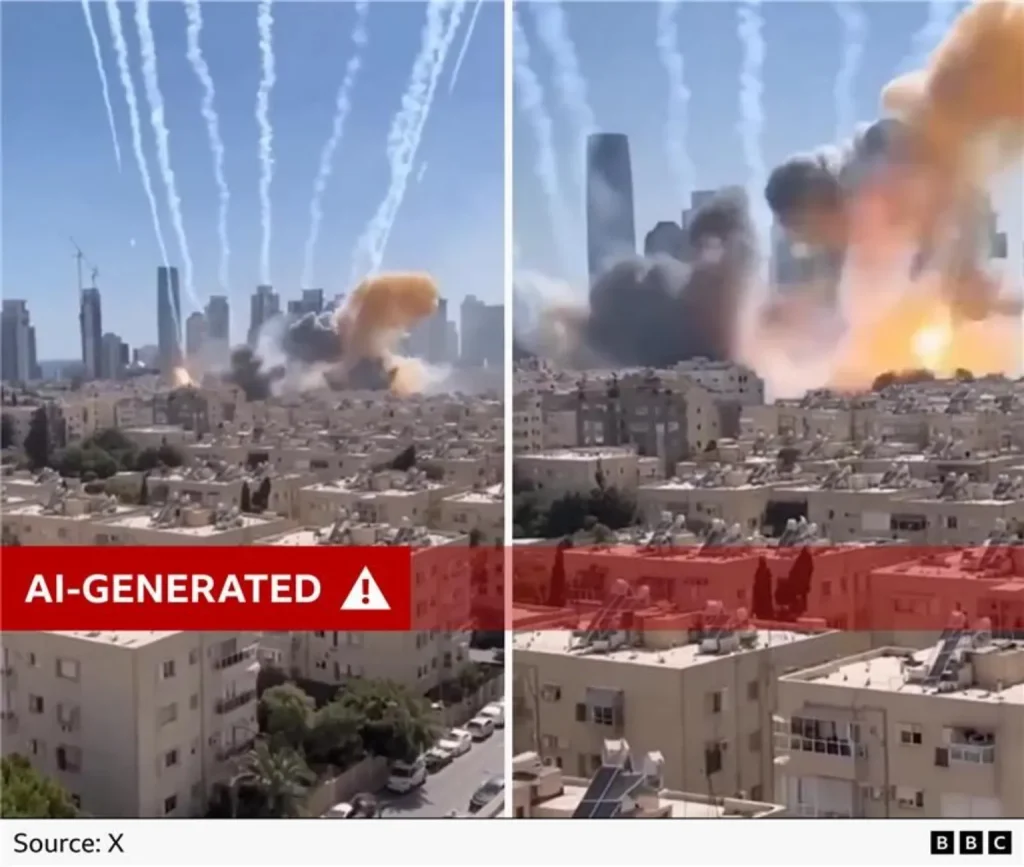
A typical example of an AI-generated video that BBC Verify has tracked appears to show missiles striking the city of Tel Aviv in Israel as the sound of explosions rings out in the background.
Source: BBC